


The situation
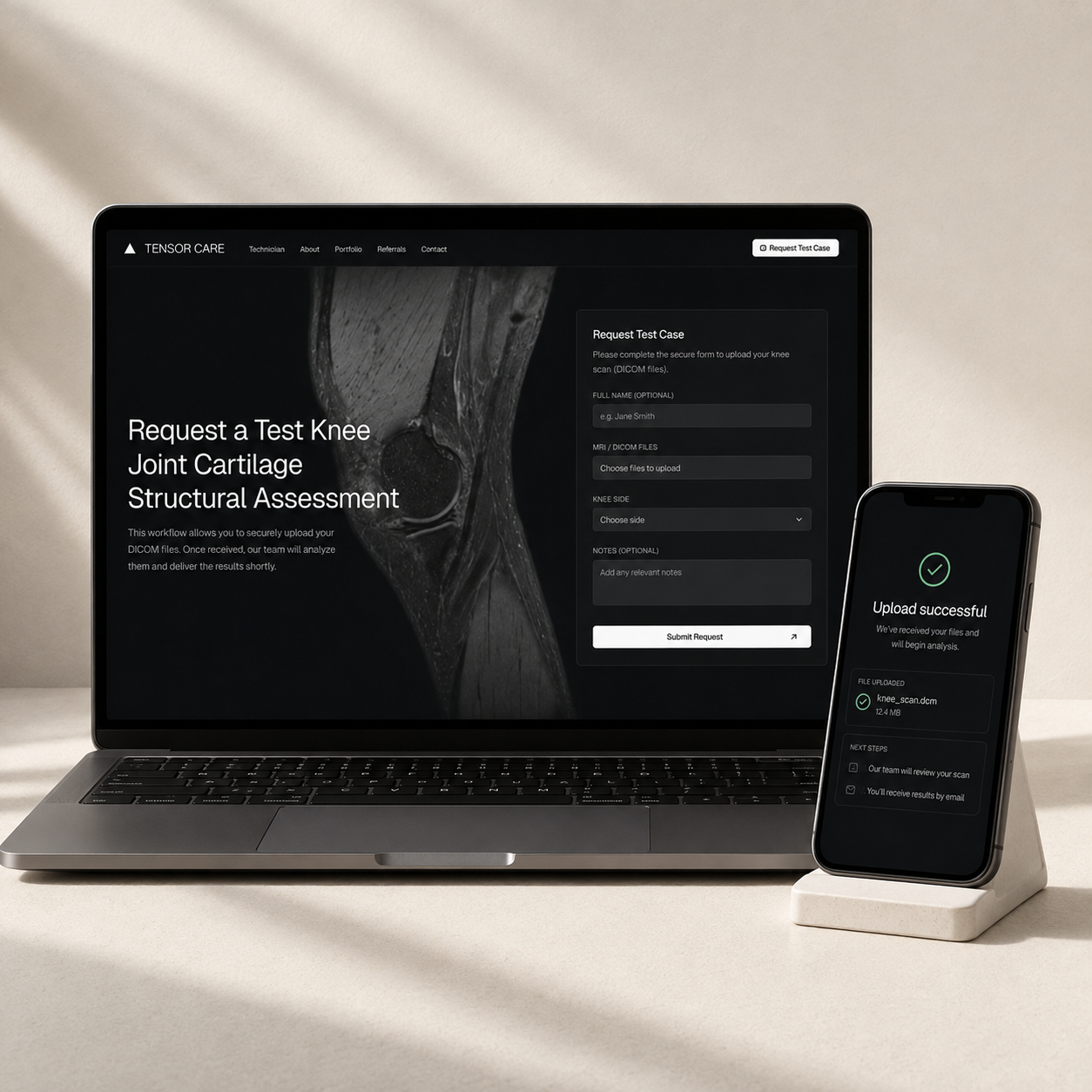
TensorCare is a MedTech company working with clinically validated cartilage analysis. Its technology supports decisions related to treatment continuation, surgical planning, and different approaches to cartilage repair or replacement. Doctors, hospitals, and clinics were interested in using the analysis, but an important part of the surrounding experience still needed to be developed.
Patients needed a clear way to transfer imaging files from a clinic into TensorCare’s analysis pipeline. This process had to support the technical requirements of medical imaging while remaining understandable to people who might be unfamiliar with file uploads and already concerned about their health.
"The project connected TensorCare’s clinical technology with the practical steps patients and healthcare partners needed to complete before an analysis could begin."
Where we focused
Healthcare products carry particular responsibilities. Clinical professionals need to feel confident introducing the system to patients, while patients need an experience that does not assume technical knowledge or create unnecessary uncertainty.
Our review considered three audiences:
- Healthcare providers - doctors and clinical staff responsible for introducing the upload process and sharing it with patients. The experience needed to feel consistent with the quality and seriousness of the clinical service.
- Patients - people who may be unfamiliar with medical file formats and more focused on their health concern than on understanding an interface. Each step needed to be clear, supportive, and forgiving of mistakes.
- Institutional applicants - research organizations requesting access to the analysis pipeline. The application process needed to distinguish professional inquiries while remaining straightforward for legitimate applicants.
The review identified three immediate opportunities: creating the patient upload flow; improving the institutional form so that organizational inquiries could be distinguished from personal submissions; and completing the legal and policy pages already included within the site’s architecture.
What we prioritized
- Plain language over technical precision. Labels, instructions, and error messages were written to explain technical requirements without expecting patients to understand implementation terminology.
- Timely feedback. Problems such as unsupported file formats or duplicate files are identified as soon as the system can detect them, rather than after the entire form has been completed.
- Consistency as credibility. New pages follow TensorCare’s established interface patterns so the upload experience feels connected to the rest of the clinical platform.
- Minimum viable friction. Every field and validation rule was considered in relation to its purpose, particularly when asking a non-technical user to complete an unfamiliar task.
How the work took shape
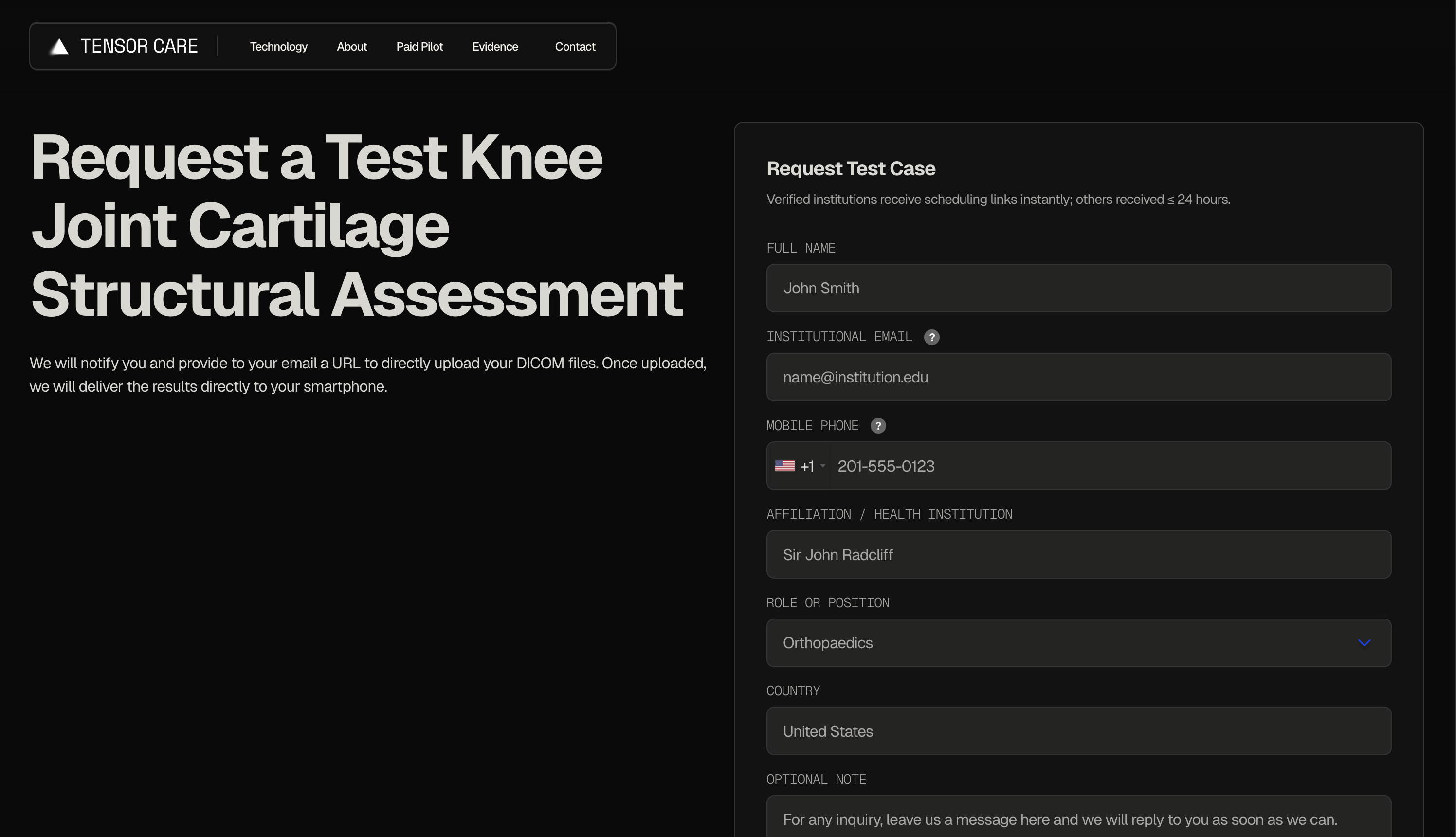
The upload experience was designed and implemented end to end. It includes validation for the medical imaging formats accepted by TensorCare, duplicate-file detection before submission, clear success and error states, and a country-aware phone input for the company’s international clinical network. The completed interface was connected directly to TensorCare’s backend API.
The institutional contact form was also refined with a front-end filter for personal email domains. This reduces unsuitable submissions before they enter the application pipeline while preserving a straightforward path for research organizations and healthcare institutions.
What changed
TensorCare now has a live upload path connected to its backend and capable of receiving patient submissions. Patients receive clearer guidance throughout the process, including immediate feedback when a file cannot be accepted or has already been added.
The institutional form now reduces applications submitted through personal email domains, and the previously incomplete legal pages contain information consistent with the rest of the website. Together, these changes create a more complete product experience around the company’s clinical technology.